









New to RC? Start Here! — The Ultimate Beginner’s Roadmap
By Atlanta Hobby Expert Staff • Updated September 2026 • 10 Min Read
Welcome to the Hobby-Grade World!
Welcome to the remote control (RC) hobby! If you've only ever driven a toy from a department store, prepare to be amazed. Modern hobby-grade RC vehicles reach speeds from 20 to over 70+ MPH, feature real fluid-filled shock absorbers, replacement spare parts, and can be upgraded endlessly.
This complete beginner guide will walk you through everything you need to know before buying your first vehicle—without confusing jargon or overwhelming technical specs.
Chapter 1: RTR vs. Kits — How Do You Want to Start?
When shopping for a hobby-grade RC vehicle, you will encounter two main delivery formats:
✅ Ready-To-Run (RTR)
Best for 95% of Beginners. RTR vehicles come 100% factory-assembled right out of the box. The motor, steering servo, speed controller, and radio receiver are pre-installed. You simply charge up the battery and start driving!
🔧 Unassembled Kits (KIT)
Best for Builders & Tinkerers. Kits arrive as bags of un-assembled screws, gears, and chassis plates. You construct the car step-by-step and usually need to purchase electronics, batteries, and paint separately.
Chapter 2: Choose Your Driving Discipline
RC vehicles are tailored for specific environments and driving styles. Choosing the right category ensures maximum fun and long-term durability.
🚛 Off-Road Bashers & Monster Trucks
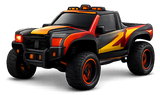
Built to absorb heavy impacts, flip over, and blast across dirt mounds, grass, and gravel. Brands like Traxxas and ARRMA excel in this category.
Shop Off-Road Bashers ➔🦗 Trail Crawlers & Scale Rig
Designed for slow, methodical technical climbing over rocks and hiking trails. Crawlers emphasize scale detail, extreme suspension articulation, and ultra-durable steel chassis rails.
Shop Trail Crawlers ➔🏎️ Buggies & Stadium Trucks
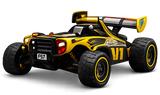
Low-slung, lightweight, and agile. Buggies offer explosive acceleration and sharp cornering precision on packed dirt tracks or smooth asphalt.
Shop RC Buggies ➔🏡 Micro & Mini RC (Indoor/Backyard)
Smaller scales (1/18, 1/24) let you set up obstacle courses right on your living room rug or patio table. Great affordable starting point!
Shop Mini & Micro Vehicles ➔Chapter 3: Understanding RC Vehicle Scales
Scale refers to the size of the RC model relative to its full-sized real-world counterpart. For example, a 1/10 scale car is one-tenth the size of a real automobile.
| Scale Ratio | Average Length | Best Operating Environment | Portability |
|---|---|---|---|
| 1/24 & 1/18 Scale | 5 to 8 inches | Indoors, living rooms, small desks, patio steps | Fits inside a backpack |
| 1/14 & 1/16 Scale | 10 to 12 inches | Driveways, short grass, smooth skateparks | Very easy to carry |
| 1/10 Scale (Most Popular) | 17 to 21 inches | Tall grass, dirt trails, BMX tracks, parks | Standard trunk size |
| 1/8 Scale & Larger | 22 to 30+ inches | Large open fields, sand dunes, extreme stunt parks | Requires heavy lifting |
Chapter 4: RC Jargon & Specification Decoder
When comparing specs on AtlantaHobby.com, keep this quick cheat sheet handy:
Chapter 5: Power Systems — NiMH vs. LiPo
The type of battery powering your RC vehicle directly impacts speed, runtime, and charging procedure:
🔋 NiMH (Nickel-Metal Hydride)
- Extremely safe and simple to charge.
- Ideal for younger drivers and budget entry points.
- Power tapers off gradually as the battery drains.
⚡ LiPo (Lithium Polymer)
- Delivers maximum voltage punch and top speeds.
- Requires balance chargers and fire-safe charging bags.
- Maintains 100% full power right up until cutoff.
Explore our complete lineup of Hobby-Grade LiPo & NiMH Batteries and smart balance chargers.
📋 Your Day-One RC Starter Checklist
Check off items as you build your dream starter package: